




Small Inductors Guide: Basics, Functions & Key Uses
Understanding Small Inductors
Introduction to Inductance

Inductance is a basic property of electrical circuits which concerns the capacity of a wire to store energy in a magnetic field when an electric current passes through the wire. Tiny inductors, such as those in thousands of electronic gadgets, use this principle to control current and to filter signals. The intensity of inductor's magnetic field depends on the current flowing through as well as other physical properties like the number of turns and the nature of the core material. This fundamental knowledge is usefull to present available in small inductors and different applications in present-days electronics.

Types of Small Inductors
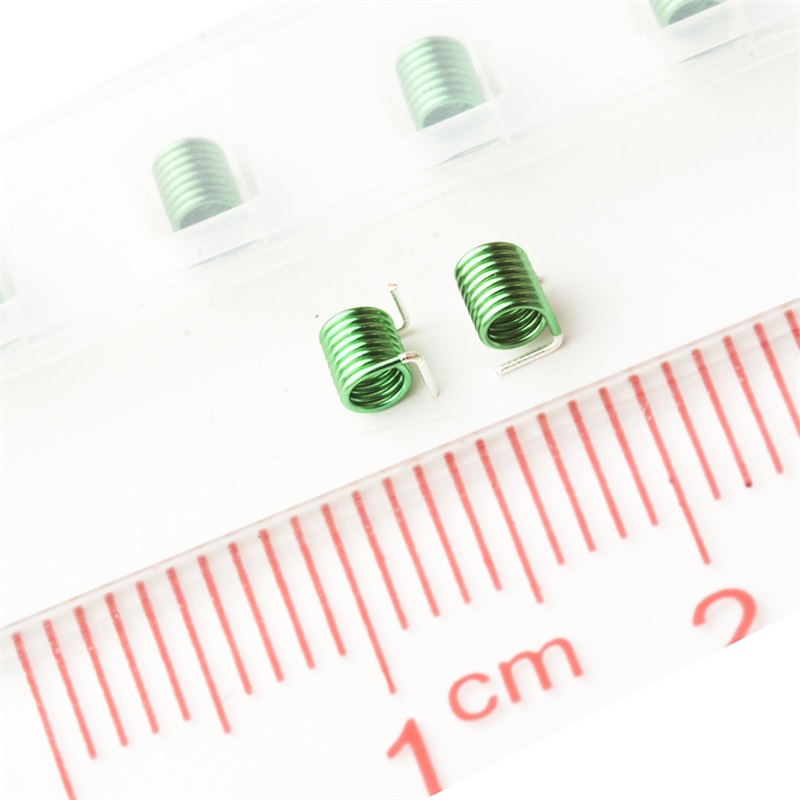
There are two characteristics on which small inductors can be classified. The core material and the configuration ,each type suitable for specific applications that includes power supply smoothing and signal processing. The air-core, ferrite-core, and toroidal inductors are commonly used. Air-core inductors have no solid magnetic core resulting in less inductance and losses while under core powers that make them suitable for high frequency. Meanwhile, ferrite-core inductors have magnetic characteristics allowing a greater inductance and can be used for the purpose of noise suppression and power conversion. Toroidal inductor, donut shaped, has no air gaps, which can cause the inductor to produce inconsistent magnetic field and therefore may have lower efficiency and produce EMI noise, ideal for power supply circuits.
|
Type |
Core Material |
Common Use |
|
Air-core |
None |
High-frequency circuits |
|
Ferrite-core |
Ferrite |
Noise suppression, power filtering |
|
Iron-core |
Iron |
Power transformers, inductors |
|
Powdered Iron |
Iron Powder |
DC-DC converters, EMI reduction |
|
Amorphous |
Amorphous Metal |
High-efficiency power applications |
Characteristics of Small Inductors
Small inductors are characterised by some important parameters, namely: inductance, rated current, resistance and the quality factor. The storage inductor is characterized by its inductance, typically in Henries (H). The rated current represents the highest current that the inductor can conduct without being saturated or overheated. Power loss in the inductor is influenced by the resistance, and a smaller resistance is better in order to have a high efficiency. And finally, the higher the value of Q (qualify factor), the more efficiently will the inductor store and release energy (lesser the energy wastage as heat). A good understanding of these factors are is essential for both engineers and electronics enthusiasts when choosing inductors for their designs, and guarantee their compatibility with the experiment/prototype and make sure their performance is optimized.

Selecting the Right Small Inductor
Factors to Consider
When it comes to choosing the best small inductor for your project, there are a number of important considerations at play. The most important criterion is the inductance, i.e. the value with which an inductor can store energy. This will meet the needs of your circuit for all its performance. Secondly, the inductor current rating may not be forgotten. It is the highest current the inductor can take without its performance being compromised, and it is important for maintaining safe operating conditions and preventing the circuit from being damaged by overheating. Finally, the size of the small inductor is of critical importance, particularly in compact implementations where space is at a premium. The challenge is finding a good balance of these factors such that you get an inductor that meets the electrical and physical requirements for your project.

Matching Inductor to Application
To determine the correct small inductor for your application, knowing what you need the part to do is important. Various electromagnetic applications require different inductance values, current and size of inductance. For example, a power supply circuit may require a compact inductor with high current and minimal inductance, while a signal filtering application may trade off inductance precision for current handling. To assist in the selection process, manufacturers provide extensive datasheets describing the performance of an inductor under a variety of conditions. Below is a brief summary table of some common applications, and their inductor needs:
|
Application |
Inductance Range |
Current Rating |
|
Power Supply |
1µH – 100µH |
High |
|
Signal Filtering |
10nH – 1µH |
Low to Medium |
|
RF Transceivers |
1nH – 10nH |
Medium |
|
LED Drivers |
1µH – 10µH |
Medium to High |
|
DC-DC Converters |
0.5µH – 47µH |
High |
Common Mistakes in Selection
For the choice of small inductors, one frequently neglected aspect is their frequency behaviour. An inductor good for low frequencies might not be as effective at higher frequencies because its resistive losses increase, or its core permeability is low. A further pitfall is when the quality factor (Q) of the inductor is ignored Q measures the inductor’s ability to store and release energy. This low Q factor may cause the loss of energy, especially in operations at a high frequency. Further, only if making all the little inductors fit physically provides that making it fit does not check against the physical dimensions of the space available on the circuit board can require risky redesigns or performance tradeoffs. Stay clear of these pitfalls and enjoy better success when selecting components and designing circuits.
Implementing Small Inductors in Circuits
Basic Circuit Integration
Looking for an added challenge? These minute particles are vital for filtering, an energy reserve and for generating magnetic fields. Beginning with basic circuit integration, the inductor's function within the circuit is an essential one to grasp. For example, in power supply system, small inductors can contribute to reduce voltage ripples so as to increase overall stable voltage output. Also don't forget to look out for the ratings of the inductor (inductance value, current rating ) that must match the circuit. One of the basic pillars is to know how to solder and (when necessary) the orientation of the components.
Advanced Techniques
When one moves on to use small inductors and more advanced techniques, the applications become more complex. Then the techniques of using inductors in series or parallel or in the form of a mono filar or bi-filar winding to provide the desired inductance and impedance also becomes relevant. Furthermore, realizing these components in RF application, such as RF-circuits, requires understanding of inductor behavior in RF regime which involves terms such as skin effect and parasitic capacitance. Techniques to reduce these undesirable effects for example in terms of by selecting inductors exhibiting suitable materials or geometries are becoming increasingly important. More sophisticated designs could also include tunable inductors, or inductively couple instead for wireless power transfer, again complicating the implementation.
Common Challenges and Solutions
However, incorporating small inductors in the circuits is not a simple task. One well-known problem is the accidental generation of electromagnetic interference (EMI) caused by high switching frequencies in circuits such as converters or inverters. Designers may mitigate this with shielding or inductors having low EMI emissions. A second issue is the physics of the circuit boards, which are constrained in space. Here it's important to choose an appropriate size and type of inductor. The following table summarizes typical problems that occur when small inductors are used and possible suggestions for dealing with them.
|
Challenge |
Solution |
|
EMI Generation |
Use shielded inductors, optimize circuit layout |
|
Limited Circuit Board Space |
Select compact, high-performance inductors |
|
Thermal Management |
Ensure adequate airflow, use inductors with low core losses |
|
Inductance Tolerance |
Choose precision-wound or adjustable inductors |
|
Mechanical Stress |
Secure mounting and use vibration-resistant components |
Future Trends and Innovations in Small Inductors
Materials and Manufacturing Advances
It's natural course and development driven by the rapid improvement and development of materials and manufacturing techniques in the small inductor world. Investigations are intensive on looking for new materials which can improve the magnetic properties of inductors and cut down their size. There has been extensive research in this field, and high permeability magnetic materials such as nanocrystalline alloys and amorphous metals are some of the leading materials. These materials offer the potential for a dramatic improvement in the effectiveness of small inductors, taking a lot of inductance in a very small package. In addition, with developments in fabrication techniques encompassing 3D printing and nano-fabrication, small inductors of complex shapes and geometries could be fabricated that were not conceivable in the past. This advancement will not only help meet the trend toward miniaturization, but will also enhance the performance of electronic equipment by having these essential devices function in the smaller of computer systems and handheld or portable communication equipment.
FAQ
What is inductance?
Inductance is a property of conductor where the conductor can stores energy in the form of magnetic field whencurrent flows through it. It is a property which is significant for the operation of inductors, which are used in electronic devices to control current flow and clean up signals.
What are the common types of small inductors?
Well, the typical small inductors are: air-core inductors, which consist of nothing but the coil having a non-magnetic core, suitable for high frequency operations with practically no inductance loss; ferrite-core inductors, which have a magnetic core to increase the inductance and they are used for noise filtration and power conversion; toroidal inductors, which resemble a donut, have a high efficiency and little EM interference, so they can be used in compact power supplies.
How is the performance of small inductors defined?
Performance of small inductors is characterized by inductance (in Henrys), rated current(the maximum current the inductor can carry without overheating), resistance (which affects power loss), and Q factor (a measure of the inductor's efficiency at storing and releasing energy).
What factors should be considered when selecting a small inductor for a project?
When choosing a small size inductor, one must pay attention to the needed inductor value to suit the circuit, the current rate so there is no heat damage, and the size of the inductor, especially if there is not a lot of space for circuit designs.
How can one match the right small inductor to an application?
Choose the right small inductor for an application, in a variety of inductor sizes Understand the requirements of the project, in terms of different inductance values, current ratings, and sizes needed for different applications such as power supply circuits, signal filtering, and RF transceivers. For actual select, detail performance info are needed which can be found in the manufacturers datasheet.
What are common mistakes when selecting small inductors?
Typical pitfalls are ignoring frequency of inductor, Q factor of the inductor and presuming all small inductors to be of same size without verifying the size, which may cause loss of efficiency or need to redesign.
What are some basic considerations when integrating small inductors into circuits?
When it comes to using small inductors, it’s important to think about their role in the circuit, to make sure the part is right in the first places based on the specifications required by the circuit application, and proper orientation and soldering if necessary.
What advanced techniques are used with small inductors?
More advanced applications such series and parallel inductors, inductor operation at high frequencies, or use of purely inductive coupling or tunable inductors, e.g., for wireless power transfer.
What are common challenges when implementing small inductors and their solutions?
Common challenges that designers face include managing EMI (electromagnetic interference) through shielding or optimized circuit layout, as well as dealing with limited space on the circuit board by making use of compact inductors, and providing effective thermal management through proper airflow or selection of inductors with a high thermal performance.
What future trends and innovations are shaping small inductors?
Trends that are likely to develop further include (i)z interpolating other high permeability magnetic core materials such as nanocrystalline alloys and amorphous metals to increase efficiency and reduce the inductor size, and (ii) technological innovation, such as 3D printing and nano-fabrication, that can enable the small inductor devices with complex cross shape and high performance.