




Inductors Explained: Types, Functions & Real-World Uses
Understanding Inductors: The Basics
What is an Inductor?

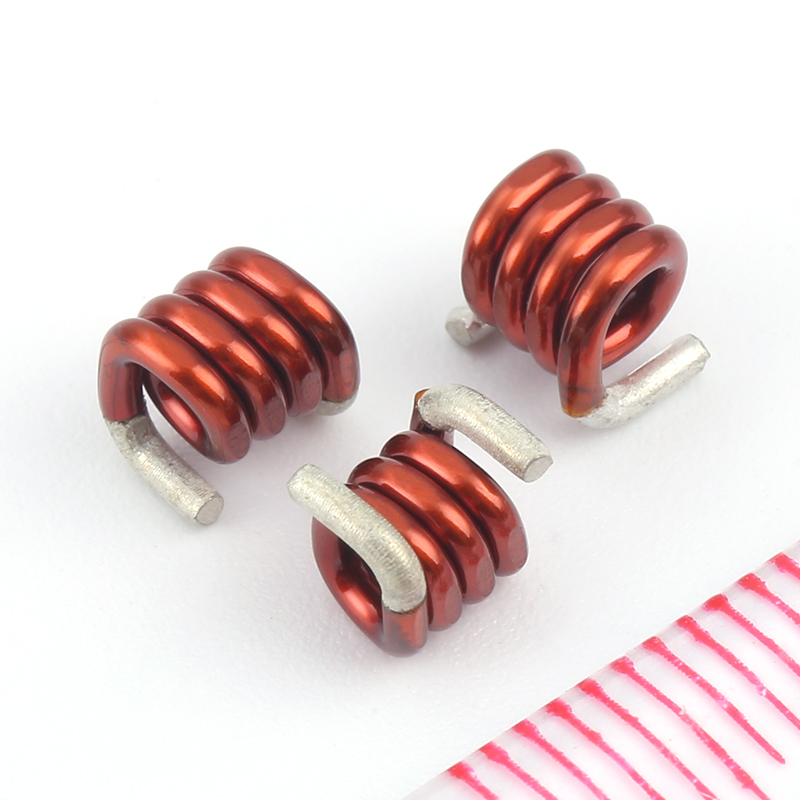
An inductor is a passive electronic component which stores energy in a magnetic field when current flows through it. In essence, it is just a winding of wire, that can be wrapped around a core of air, iron, or whatever you like. The important property of an inductor is its inductance, defined as the ratio of the voltage to the rate of change of current. This is a property that contributes in an important way to inductors being used with capacitors to produce filters and inductors being used in various other circuits to store energy, such as in a power supply. An inductors performance is closely related to its physical construction, number of turns in the coil, and the type of material surrounding the core.

Types of Inductors
There are many kinds of inductors, each suitable for a particular type of application or application. The common types are fixed inductors, variable inductors, toroidal inductors, and air core inductors. Fixed inductors have a predetermined inductance, while variable inductors can be adjusted to the amount of inductance. Donut-shaped toroidal inductors have excellent performance and low EMI. Air core inductors do not have a core, and have poorer inductance, but no core losses. The decision on the types to use is based on the needs of the specific application (surface-mount or through-hole), how much inductance is needed, current carrying capacity and performance at a frequency.
|
Type |
Core Material |
Application |
|
Fixed |
Iron, Ferrite |
Power supplies, Filters |
|
Variable |
Air, Ferrite |
Tuning Circuits |
|
Toroidal |
Ferrite, Iron Powder |
High-efficiency Circuits |
|
Multilayer |
Ceramic, Ferrite |
Compact RF and digital circuits |
Core Materials and Their Impact
The core winding of an inductor is the key to its performance. The core material may be air or different types of metal alloys and ferrites. Air core inductors have lesser inductance values, however they do not face core losses and saturation at high frequencies hence are best suited for radio frequency applications. Iron cores provide for the high inductance value and are used in the majority of power electronics. Due to being magnetic ceramics, ferrites have a good compromise between permeability and losses at high frequencies and are therefor suitable for broadband and highfrequency applications. The core material selection is critical because it has a direct impact on the inductor's reluctance and again affects the inductor's efficiency, frequency response, and energy-handling capabilities.

How Inductors Work
The Physics Behind Inductors
Central to the function of an inductor is the principle of electromagnetic induction, which was discovered by Michael Faraday. When wire carries electric current, it creates a magnetic field. The strength of this magnetic field is directly proportional to the current passing through the wire and can be increased by coiling the wire to create an inductor. The material at the center of the wire also has a large impact on the magnetic field. Ferromagnetic substances such as iron could allow for increased magnetic field strength, and hence, for a more efficient inductor. An inductor has for one of its properties to be able to accumulate the energy of this magnetic field when the current is rising, and return it when the current is falling.
Inductor in a DC Circuit
Inductors also really do some amazing things when inserted into a DC circuit. Initially when a DC voltage is applied, being reactive (L), the inductor resists change in current and allows current to flow through with a slight delay. This is similar to inertia, since the inductor resists the rapid rate of change of current flow through it. Once the magnetic field settles, the inductor becomes a short circuit and the DC current can flow through without any resistance (assuming that there is no actual resistance in the wire). This unusual characteristic is indicative of the inductor's function in filtering and stabilizing a circuit by damping sudden changes in current.
Inductor in an AC Circuit
Inductor have dynamic nature in AC as the current in the inductor keeps changing with changing the direction of the current in AC Circuits. This causes an on-off cycling of the field, building and collapsing, and creating a voltage in opposition to the current, called back EMF (Electromotive Force). This resistance to change in the present is measured by the inductance reactance, which is frequency dependent. The higher the frequency, the larger the reactance, so that inductors do effective as filters for high-frequency interference. This characteristic is critical for applications such as radio tuning in which specific frequencies are extracted from a wider spectrum.
|
Frequency (Hz) |
Reactance (Ohms) |
|
100 |
6.28 |
|
1,000 |
62.8 |
|
10,000 |
628 |
Practical Applications of Inductors
Inductors in Everyday Electronics
Inductors might not be the heroes of the electronics industry that resistors, capacitors and semiconductors are, but when you need one to get an appliance up and running after its inductor's busted, you'll be glad you learned a little something about them. The latter do not only play an important role with the reduction of electromagnetic disturbances to ensure the smooth function of our gadgets and equipment without interference from external noise, but are also essential in power supply circuits. For example, in the complex power circuits found in smartphones, inductors cooperate with capacitors and other components to create buck or boost converters, which are essential for fine-tuning the voltage to the specific needs of various parts of the device. This ensures that energy is used as efficiently as possible not only for performance but also to maximize battery life.
In addition, inductors are used in filtering applications as found in audio and video electronics equipment, speakers, microphones, and T.V's. When involved in the LC (inductor-capacitor) filter circuit, it contributes to the enhancement of signal quality and the elimination of unwanted frequencies, with the end result being an enhanced experience for the user, as sound is clearer, images are sharper, and data processed is more secure. In wireless charging systems, inductors play a double role, in the transmitter and receiver, as an element of the resonant inductive coupling process that enables power transfer across space without connectors.
Inducers are used in network and communication equipment as well. For routers and modems, inductors are needed to preserve signal integrity across frequency spectrum for strong and solid internet signal. This wide list of applications points out the technical importance of inductors and also contributes to the practical side of technology in everyday life, and because of this, inductors are mandatory elements in the design and operation of electronics.
Power Supply Circuits
In power circuits, it is an indispensable element, which has the temporarily storage of energy that the inductance has, and the property to reduce the change rate of current. They are used in optimal design of switch-mode power supplies (SMPS), which convert power efficiently from a source to the load needed voltage or current. The addition of inductors to these circuits result in smaller, lighter, and more efficient power supplies, compared to circuits using only capacitors, making them feasible for portable applications where weight and battery life are major concerns.
|
Application |
Function of Inductor |
|
Computer Power Supplies |
Smooth out voltage ripples |
|
LED Drivers |
Regulate current to maintain constant brightness |
|
Wireless Chargers |
Transfer energy via magnetic fields |
|
Audio Equipment |
Filter out high-frequency noise for cleaner sound output |
|
DC-DC Converters |
Store and release energy to change voltage levels |
RF and Communication Systems
In RF/Communication system domain, inductors not only have simple tasks such as filtering and tuning, they also are being used some complex and special circuits. These are used in various circuits requiring accurate control of signal frequencies, and thus are essential parts of the performance and design of the circuit. For example, inductors are used in the design of low-noise amplifiers (LNAs) that are used to improve the quality of a received signal prior to subsequent processing. This is of particular importance for satellite communications and mobile telephony, where signal integrity is essential for clear descriptions and no-loss data interchange.
Furthermore, inductors are widely used in a variety of oscillators, which are the heart of a number of RF and communication products. Oscillators produce signals at a predetermined frequency, and inductors in conjunction with capacitors allow the frequency stability and control required by a designer. Local oscillators are used for example in the superheterodyne receivers from which most every radio and television are built, and in the frequency synthesizers that are the heart of digital communication systems, such as modern WiFi and Bluetooth.
Inductor versatility also applies to increasing the performance of RF power amplifiers – vital for making signals travel over long distances, from the phones in our pockets to broadcast towers. Engineers simply need to tweak the inductive elements in the amplifier design to minimize power loss and to widen the bandwidth, achieving more efficient transmission and reception. Inductors, as they are capable to store and dissipate energy in a magnetic field, are esential devices to sharpen the performance and efficiency of communication system, and they remain to be an essential part of the field of electronics and communication engineering.
Future and Advances in Inductor Technology
Materials and Efficiency Improvements
In the search for increasing efficiencies in the e-devices economy, the advancement in materials of an inductor has a critical part to play. Materials that can enable inductors, smaller and dramatically more efficient, for example, high permeability magnetic material, are being highly studied and developed. These materials, Youn said, result in physical size reduction of the inductor without sacrifice of energy storage, which is an increasingly important requirement in tightly packed electronics. This has promoted the development of alloys, such as amorphous and nanocrystalline, which possess better magnetic performance, and then make it possible to fabricate high-performance, small-sized inductors.
Nanotechnology enhances the potential even more for inductor efficiency and size reduction. New types of materials that are superconducting at higher temperature are being studied, paving the way for form of inductors that almost don’t have Joule losses. The potential use of superconducting materials could allow an entirely new level of energy efficiency for inductors, with the resistive losses due to current conduction in conductive materials dramatically reduced or even entirely eliminated. This technology has the potential for incredibly efficient inductors that can operate in what were once deemed to be impossible environments due to the cooling of traditional superconductors.
In addition, the investigation and application of these emerging materials contribute to future generations of electronic devices with a smaller size and lower energy consumption. With the increasing popularity of portable and wearable devices, the significance of this development of inductor technology is evident. These advancements in materials and performance also promote the sustainability of electronic devices by minimizing the energy consumption and as a result, the environmental impact of such technologies.
Emerging Applications
With new technology comes new uses for inductors. One of themost interesting applications is wireless charging, for which inductors are used to transfer energy effectively without physical contact. There is a new application space as well such as automotive electronics including electric vehicle (EV) and hybrid system in which inductors are essential elements of power conversion and management. Furthermore, the progress of IoT (Internet of Things) technology has created prospects for inductors, in particular in increasing connectivity and data transmission speeds for better antenna solutions.
|
Application Area |
Inductor Role |
Future Impact |
|
Wireless Charging |
Power Transfer |
Enhancing Efficiency |
|
Electric Vehicles |
Power Management |
Increasing Range |
|
IoT Devices |
Data Transmission & Connectivity |
Enabling Miniaturization & Low Power Use |
|
Renewable Energy |
Energy Conversion & Filtering |
Boosting System Reliability |
|
5G/Telecom Systems |
Signal Conditioning |
Supporting Higher Bandwidths |
Challenges and Solutions
Despite the encouraging progress, some challenges remain in the domain of inductor technology. One is physical size of an inductor which is an obstruction in the miniaturization of electronic devices. This challenge is being addressed by new developments in inductor design that employ 3D structures to achieve higher inductance values in less floor space. Also, inductive elements dissipate heat when lossy (heating at high frequencies), thereby decreasing device reliability and performance. Some solutions are to use materials with greater thermal conductivity as well as using new cooling processes. With these issues out of the way, we can expect tiny inductors that are also highly efficient and can perform robustly in tough environments.
FAQ
What is an inductor?
An inductor is a passive electrical component used to store energy in the form of a magnetic field when electric current flows through it. And the coil around a core of such materials as air, iron, or ferrites, is generally used in practice. Inductors are essential components for filtering, energy storage, voltage regulation and many other applications in electronic circuitry.
How does the choice of core material affect an inductor's performance?
The core material has a major impact on the performance of an inductor, such as efficiency, frequency response and power handling-capability. Air cores offer lower inductance, yet avoids core saturation and loss at high frequencies and are far perfect for RF use. For power electronics applications, iron cores afford more inductance, ferrites provide a balance between permeability and high frequency losses, which are appropriate for broadband and high frequency uses.
What is the principle behind the operation of inductors?
If you are no stranger to inductors, they are a product of Faraday's principle of electromagnetic induction. When an electric current passes through a wire, it produces a magnetic field around it. Wrapping the wire around increases this magnetic field, the presence of a ferromagnetic core can then (aided by its hysteresis) build the magnetic field up even higher. An inductor can store energy in the magnetic field, which when combined with a current which is varying in a loop of wire, provides a useful means of analyzing how currents and fields are related.
How do inductors behave in a DC circuit?
In a DC circuit, inductors impede a change in current through inductive reactance, and thus allow current to rise (or fall) only after an inductor has already reached its final current. As the magnetic field becomes established, the inductor becomes more and more like a short circuit to the DC current (assuming there is no resistance in the wire). This characteristic is exploited to eliminate discontinuities in the amount of current, helping to stabilize the circuit.
What role do inductors play in AC circuits?
In AC circuits, inductors oppose changes in flow of alternating current by building and collapsing their magnetic field, resulting in a voltage (back EMF) that opposes the change in current direction. This opposition, or reactance, grows with increasing frequency, so inductors are good at blocking high frequency noise. This behavior is essential to applications such as in tuning the radio, which requires tuning to one frequency and rejecting all others.
Can you explain the significance of inductors in power supply circuits?
Inductors are the heart of power supply circuits, particularly when building SMPS that are found in all kinds of electronic systems. They take a charge temporarily and control the rate of change of current, allowing efficient power conversion to the desired voltage and current levels. It can be used to make smaller and lighter power supplies for portable equipment such as mobile phones, the latter for a smaller charging component.
How are inductors utilized in RF and communication systems?
In RF and comm systems, inductors have important roles besides filtering and tuning. They are important for designing LNAs for low noise, oscillators for defined signal frequencies, and RF power amplifiers for signal transmission. By optimizing the most critical inductive components, engineers can get the level of control they need for signal frequency, stability and efficiency needed for dependable communications.
What are the emerging applications and future of inductor technology?
Inductors are being deployed in exciting new applications including wireless charging, electric vehicles (EV) technology and the Internet of Things (IoT) to increase energy efficiency, improve power management and enable communication. Advancements in materials (e.g., high magnetic permeability materials) and structure and even nanotechnology indicate that a smaller and high efficiency inductor is possible. These developments are very important for portable/wearable technology and contribute to sustainability of electronic devices.
What challenges does inductor technology face, and how are they being addressed?
Due to its physical size restriction and generation of excessive heat at high frequency, inductor technology has been subject to the challenge. The first issue can be addressed by designing new inductors with 3D structures to increase inductance in a minimum area, while materials with higher thermal conductivity can be utilized for better cooling. The goal of these developments is to make inductors smaller, more efficient and capable of reliable performance in harsh environments.
How do inductors contribute to the functionality of everyday electronics?
Inductors are key components of modern electronics to ensure that these electronic devices operate smoothly by reducing electromagnetic interference (EMI) and enabling efficient power supply. They are used to regulate voltage in power circuits in applications including smartphones to deliver the ideal combination of performance and battery life. Furthermore, inductors are important in the filtering operation in audio and visual systems, enhancing the signal in these, and in wireless charging systems as well, where they serve for allowing power transfer without the need for physical connections.