




Electronic Coils Guide: Master Basics to Pro-Level Design
Understanding Electronic Coils: The Basics
What is an Electronic Coil?
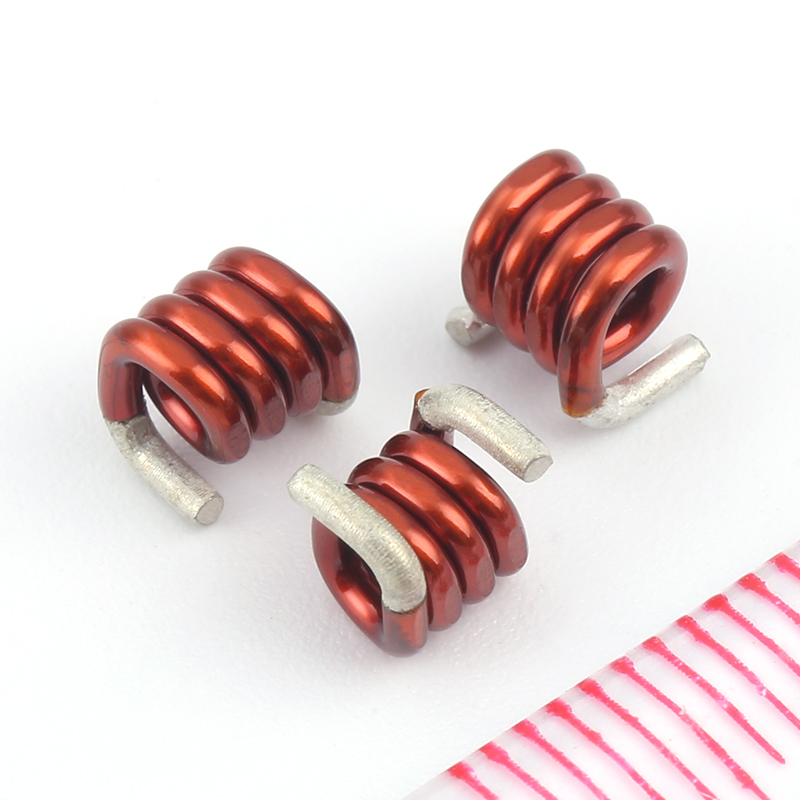
An electronic inductor, more generally known as a coil, is a basic passive electronic component used in electronic circuits. It's a winding of wire (most often copper) wound around a core, or forming it's own or a self supporting air core, to form an inductor. They are key components to manage compressed electricity, being there for energy storage, filtering, and voltage transformation by the electromagnetic induction. Their ability to store charge temporarily and discharge it just as fast is not only freeing but also convenient for use in circuits for radio broadcasting, power regulating, and sound systems. The design of an electronic coil, including its number of turns and core materials, greatly impacts its efficiency and performance.
Types of Electronic Coils

There are many types of electronic coils and each is intended for different applications and uses. The most common coils are solenoid coils which are used primarily to convert electrical energy into mechanical force, toroidal coils, known as doughnut or ring shaped having the advantage of being very efficient in reducing the common mode and space/stray electromagnetic interference generated electrical noise, and air core coils which do not have a solid core and are frequently used wherein inductance should be free from core losses. Other notable types include ferrite core coils in which magnetic core is used to achieve higher inductances in the smaller sizes. This versatility makes them suitable in anything from a power supply to a telecommunications system.
|
Type of Coil |
Core Material |
Common Use Cases |
|
Solenoid Coil |
Metal or None |
Actuators, Valves |
|
Toroidal Coil |
Ferrite, Iron |
Transformers, Power Supplies, EMI Filters |
|
Pancake Coil |
None or Ferrite |
Wireless Charging, Inductive Sensors |
|
Voice Coil |
Permanent Magnet |
Loudspeakers, Precision Positioning |
Key Parameters and Specifications

Knowledge of the relevant parameters and characteristics of electronic coils is important for their successful use. The most important of these are inductance (in Henrys, which sets the coil's capacity to store energy), resistance (governing how much the coil will oppose the passage of current) and Q factor, which describes how efficient the coil is at its resonant frequency. Also, this saturation current value is the maximum current that a coil will accept without experiencing a very large drop in inductance. These parameters not only direct coil selection in any particular situation, but also the functionality and robustness of the electronic equipment.
|
Parameter |
Description |
|
Inductance (H) |
Ability to store energy in a magnetic field |
|
Resistance (Ω) |
Opposition to current flow |
|
Q Factor |
Measure of coil efficiency and selectivity |
|
Capacitance (F) |
Ability to store electric charge |
Designing and Selecting Electronic Coils
Coil Design Fundamentals

To design an electronic coil, a profound knowledge of electromagnetic theory and the demands of the application are necessary. The type of material contained at the core, wire size, coil diameter and number of turns are the key elements which affect the inductance, resistance and Q of the coil. Proper design is used to enable the coil to efficiently operate as part of the electrical circuit it was intended, while reducing the wasted energy and heat generation. These parameters need to be precisely selected by engineers to find the best balance between coil performance and desired circuit needs in terms of things like operation frequency and current handling capacity. Such a painstaking design of the coil is of utmost importance to achieve the desired electrical properties as well as the reliability and durability of the electronic appliance.
Selecting the Right Coil for Your Application
The correct electronic coil for your application Knowing the specifications and their compatibility with your project is the key to selecting the correct electronic coil for your application. Air-core, iron-core, and ferrite-core coils all have different benefits in the areas of inductance, efficiency, and size. For high frequency uses air-core coils are better because of the small parasitic capacitance. On the other hand, iron-core and ferrite-core coils are suitable for large inductance applications. There's the added consideration of environmental conditions (like temperature and humidity) that can also impact a coil's performance. You can reference datasheets and manufacturers reference guide to find out the specifications of a particular coil to make sure it works as you need it too.
|
Coil Type |
Application Example |
Advantage |
|
Air-core |
Radio Frequency circuits |
Low parasitic capacitance |
|
Ferrite-core |
Power supplies, EMI filters |
High permeability, compact size |
|
Iron-core |
Audio equipment |
High inductance, cost-effective |
|
Toroidal |
Transformers, inductors |
Minimal electromagnetic interference |
Common Design Mistakes and How to Avoid Them
Typical design errors committed in the case of coils for electric pulse devices are misjudgements of parasitic parameters, heat considerations as well as core saturation effects. The parasitic capacitance and resistance can have a big impact on a coil's effectiveness, particularly in high-frequency applications. Such effects may be reduced by providing enough separation between turns, and by using materials of low dielectric constant. Thermal control is also important as coils can become hot and cause the performance to decline or fail if not managed correctly. Finally, running a coil at or above its saturation current can yield a significant reduction in inductance. Attention to these issues during design will help ensure that expensive rework is avoided and the e-coil performs as required for the application.
Implementing and Testing Electronic Coils
Setting Up Electronic Coils in Circuits
To design electronic coils, the process begins with the right coil selection for the circuit's use. It all depends on different applications, and inductance, current capacity, frequency of operation. For example, in power supply circuits, a coil that meets requirements for energy storage in comparison with coil that is commonsensical to utilize a magnetic substance can be used for power with an inductor, coil in use with the power circuit of a switch mode power supply, in practice to the coil with a large inductance and the large-current capacity is extended. On the other hand, in signal processing or filtering applications, like a RF circuit, one might be more interested in the coil's quality factor (Q-factor) and in its ability to filter or to tune to a certain frequency.
To make the coil into the circuit physically is important and it is an operation that has to be paid attent to. It needs to be placed so that it does not disrupt other parts, in such a way that it does not cause undesirable inductance because something on the PCB causes it to oscillate, which would make the rest of your circuit unstable, or simply noisy. It is important to have a high quality solder joint while soldering the coil to the board to avoid any potential contacts issues which will effect the circuit performance. A bad solder joint also introduces inductance and resistance at the connection point, thereby disturbing the operation of the complete circuit.
Also, the EMI of coils can be a problem, especially for the EDCs in which the electronic equipment tends to be more sensitive. To reduce EMI effects, it is recommended to place the coil non-closely to the high-sensitive items (e.g. precision analog device or microcontroller). Furthermore, in some circumstances, shielding methods or the use of ferrite beads can also help limit EMI. These are also important conditions and must be satisfied to prevent sacrificing the integrity and performance of the circuit with the coil and to obtain an electronic system that works effectively.
Testing and Troubleshooting
After an electron coil is assembled into a circuit, it should be tested to confirm everything is working correctly. This is very typically followed by the simple test of making sure the coil is connected properly. After that, the coil inductance and resistance can be measured by a multimeter or LCR meter to understand characteristics of the coil. Typical problems, such as shorted turns or opens, can be detected from these measurements. Diagnosis needs to be methodical, begin with a sight check for damage, and proceed to more in-depth power examination. The chart below contains some general troubleshooting techniques and symptoms to look for:
|
Troubleshooting Step |
Symptom |
Potential Solution |
|
Continuity Test |
No continuity |
Check for broken connections |
|
Inductance & Resistance Check |
Abnormal readings |
Replace damaged coil or recalibrate |
|
Visual Inspection |
Burn marks, cracks |
Replace faulty components |
|
Thermal Check |
Overheating |
Improve ventilation or lower input power |
Case Studies: Successful Coil Implementations
Investigate practical applications of electronic coils into viable strategies. An example is the design of a well-specified coil in a high-frequency power supply where the coil specification plays a key role in energy-loss reduction and efficiency. An additional example is the embedding of an electronic coil in RFID systems, where inductance and form of the coil were critical design parameters for optimizing signal magnitude and reach. The examples illustrated here highlight that careful choice of coils in topologies is crucial for achieving unique functional targets. They further illustrate how creative methods to lift standard limitations can lead to electronic devices with dramatically enhanced capabilities and performances.
FAQ
What is an electronic coil?
An electronic component, called in this context a coil, is a loop of wire, often wound around a magnetic core, to create an inductor or electromagnet. It use electromagnetic induction to store energy, filter signal or creating ideal transformer to provide impedance matching between high voltage and low voltage circuit. It is widely used in radio, TV, audio, power supply etc, with frequency range from audio to radio frequency. The impedance and performance of the coil are largely determined by the design, including the number of windings and the core material.
What are the most common types of electronic coils?
These energy storage elements can be, but are limited to, solenoid, toroidal, air core and ferrite core coils. Examples of such coils include relay or solenoid coils used to convert electrical energy to mechanical motion, toroidal coils known for their high efficiency in suppressing electromagnetic interference in view of the shape of a donut, air core coils used when inductance free from core loss is required, and ferrite core coils using a magnetic core for obtaining a large inductance value in a small space.
What are the key parameters to consider when working with electronic coils?
There are several parameters of interest such as inductance in Henrys, resistance representing the opposition to the current flow, the Q factor, a measure of the efficiency of the coil at the resonant frequency, and the saturation current, the maximum current that the coil can tolerate before its inductance starts to drop significantly.
How do you design an optimal electronic coil?
The design of a quality electronic coil requires mastery of electromagnetic theory and particular application conditions. These parameters such as core material, wire diameter, coil diameter and number of turns have to be calculated accurately to control the inductance, resistance and Q factor of the coil. This will allow the coil to operate effectively in the circuit in which it is intended, reducing power losses and heating.
How do you select the right coil for a specific application?
Picking the best coil requires a solid knowledge of coil specifications and how they would fair with your job's needs. Requirements such as inductance, efficiency, and size and environmental conditions, for example temperature and humidity also would come into play in selecting an inductor. I suggest you to refer to a datasheets and manufacturer guides for that matter.
What are common design mistakes with electronic coils and how can they be avoided?
Typical bad designs involve a poor understanding of the influence of the parasitic elements, ignoring thermal issues and not considering the saturation of core. These errors can be eliminated by:a) providing spacing along the individual turns, b) using low dielectric constant materials, c) efficiently managing heat generation, and d) maintaining inductance while the coil is being operated at its saturation current limits.
How are electronic coils integrated into circuits?
An electronic coil is applied in an a circuit according to the required inductance and current carrying capability in a specified frequency. The physical integration requires precise placement to reduce the crossover of other features and high integrity solder joints to avoid the cutter as a disconnected feature. Techniques for reduction and prevention of EMI must also be considered, including: placement and use of ferrite beads.
What steps are involved in testing and troubleshooting electronic coils in circuits?
Testing includes continuity test to check the end-to-end connections and a high-voltage test to ensure charging performance Inductance and resistance are checked to make sure the charging cable can provide as much power as your phone needs. Troubleshooting may involve visual inspection for mechanical damage, windings opens, etc., and at a more granular level, electrical testing, looking for shorted turns or opens, with solutions going from checking for loose connections, to fine tuning or adjusting levels of inductance and resistance.
Can you provide examples of successful electronic coil implementations?
Applications include high frequency power supplies (and RFID systems) where coil specifications such as inductance and shape were important to minimize energy loss, improve efficiency and maximize signal strength and range. These cases emphasize the necessity of careful coil selection and placement for purposes of operation.
Why is it important to consider environmental factors when selecting electronic coils?
Performance of the electronic coil can vary greatly due to environmental conditions like temperature and humidity. For example, the high temperature may decrease the efficiency of the coil and may even cause a break down, humidity promotes corrosion or may cause a short. By choosing coils which are appropriate to the environmental conditions in which they are to be used, the electronic apparatus exibits a reliable operation and life.