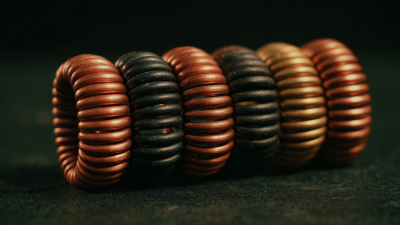
When you're diving into electronics projects, one of the key things you really wanna think about is picking the right spring inductor. These little guys are super important because they help control the flow of electrical currents, and honestly, choosing the right one can make a huge difference in how well your device works. With so many options out there, it can get pretty overwhelming — so getting a good handle on what each inductor does and where to use it is pretty crucial, whether you're a seasoned pro or just starting out.
Picking the perfect spring inductor isn’t just about looking at specs like inductance, current capacity, or resistance. You also gotta think about how it’s gonna fit into your specific circuit setup. When you choose the right one, it can really boost your project’s efficiency, make your signals cleaner, and cut down on noise — all of which helps you get a great final result.
In this guide, I’ll walk you through the main things to keep in mind when selecting spring inductors. Whether you’re trying to be innovative or just want your project to be reliable, having the right info makes all the difference. So, don’t worry — with a bit of guidance, you’ll be making smart choices in no time and creating stuff you can really be proud of.

Understanding the Basics of Spring Inductors in Electronics
Spring inductors play a crucial role in various electronics applications, particularly in filtering, energy storage, and signal processing. Their design typically comprises a coil of wire wound into a spiral or helix shape, allowing for efficient magnetic field generation and energy storage. According to a report by Industry Research, the demand for inductors, including spring inductors, is projected to grow at a CAGR of approximately 6.8% from 2021 to 2026, driven largely by advancements in consumer electronics and the increasing prevalence of electric vehicles.
Understanding the basics of spring inductors is essential for selecting the right component for your project. Key parameters include inductance value, current rating, and resistance to saturation. Inductance, measured in henries, defines the ability of the inductor to store energy in a magnetic field. A study published in the Journal of Electronics Materials highlights that choosing the correct inductance is vital—over 40% of design failures in power circuits can be traced back to incorrect inductance selection. Additionally, considering the current rating is paramount, as exceeding this limit can lead to overheating and component failure. Thus, careful evaluation of the specifications and application requirements is essential for optimal performance in electronic designs.
Identifying Key Specifications for Spring Inductors
When selecting a spring inductor for your electronics projects, understanding the key specifications is crucial to ensure optimal performance. One of the primary specifications is the inductance value, measured in henries (H). This value dictates how much energy the inductor can store and release in response to changes in current. A higher inductance is beneficial for low-frequency applications, while lower values may suit high-frequency circuits. It’s essential to choose an inductor that meets the frequency requirements of your project to avoid potential inefficiencies or unwanted interference.
Another important aspect to consider is the current rating, which indicates the maximum current the inductor can handle without overheating or saturating. It's vital to select an inductor with a current rating that exceeds the expected load to ensure reliability and longevity. Additionally, the inductor's size and construction material can impact its performance in different environments. For example, the core material influences the efficiency and thermal characteristics, while the winding technique can affect the inductor's resistance and stability under varying conditions. By carefully analyzing these specifications, you can effectively choose a spring inductor that aligns with your project’s needs and constraints.
How to Choose the Right Spring Inductor for Your Electronics Projects - Identifying Key Specifications for Spring Inductors
| Inductor Type |
Inductance (µH) |
Current Rating (A) |
DC Resistance (Ω) |
Dimensions (mm) |
| Spring Inductor A |
10 |
5 |
0.1 |
5 x 5 x 10 |
| Spring Inductor B |
22 |
3 |
0.2 |
6 x 6 x 12 |
| Spring Inductor C |
47 |
2 |
0.3 |
7 x 7 x 14 |
| Spring Inductor D |
100 |
1 |
0.5 |
8 x 8 x 15 |
Evaluating the Inductance Value for Your Project Needs
When evaluating the inductance value for your electronics project, it's crucial to understand the role inductors play within a circuit.
Inductance is a measure of an inductor's ability to store energy in a magnetic field when electrical current passes through it.
According to a recent industry report from the International Electrotechnical Commission,
the choice of inductance can significantly affect the performance of power supplies, filters, and oscillators in your designs.
The required inductance typically depends on the application, as different projects may demand specific values to ensure optimal functionality.
Tips:
1. Determine Your Frequency Range: The frequency at which your circuit operates will greatly influence the inductance value you should choose.
For high-frequency applications (above 1 MHz), smaller inductance values (typically in the microhenries range) tend to be sufficient,
while low-frequency applications might require higher inductance (in the millihenries range).
2. Consider Current Rating: It is essential to select an inductor that can handle the current for your project without saturating.
Industry standards recommend that the inductor's DC current rating should be at least 20-30% higher than the maximum current expected in your circuit.
This precaution ensures reliable performance and longevity of the component.
Understanding these considerations will aid in selecting the right spring inductor that aligns with your project requirements,
enhancing both efficiency and reliability in your electronics applications.
Assessing Current Ratings and Temperature Coefficients
When selecting a spring inductor for your electronics projects, understanding its
current ratings and
temperature coefficients is paramount.
Current ratings indicate the maximum amount of current an inductor can handle without overheating or
losing efficiency. Exceeding this rating can lead to saturation, where the inductor no longer functions
effectively. This is particularly crucial in applications with varying loads, as a wrong choice could
result in component failure or compromised circuit performance. Therefore, it's essential to analyze
the expected current levels in your project and choose an inductor that can comfortably manage these
demands.
Temperature coefficients, on the other hand, reflect how an inductor's inductance changes with
temperature variations. Different materials exhibit distinct temperature characteristics, making this
a vital factor to consider, especially in environments with fluctuating temperatures. A stable
temperature coefficient ensures that the inductor maintains its performance across the expected
operating range, contributing to the overall reliability of the circuit. By assessing both current
ratings and temperature coefficients, you can ensure that your chosen inductor will meet the
specific requirements of your project while providing longevity and stability in its performance.
Comparing Different Types of Spring Inductors Available
When selecting the right spring inductor for your electronics projects, understanding the different types available in the market is crucial. Spring inductors can broadly be categorized into air-core, ferrite-core, and iron-core inductors. Each type possesses unique characteristics affecting performance, efficiency, and application suitability. For example, air-core inductors are known for their high-frequency applications due to their minimal eddy current losses and wide bandwidth, making them ideal for RF circuits. According to a recent industry report, air-core inductors can operate effectively up to several GHz, making them a top choice for advanced communication applications.
On the other hand, ferrite-core and iron-core inductors are preferred in scenarios requiring higher inductance values and better magnetic efficiency. Ferrite-core inductors are often utilized in power supply circuits due to their energy efficiency and ability to manage heat effectively. Recent data show that ferrite-core materials can handle a higher saturation flux density, making them suitable for compact applications. Meanwhile, iron-core inductors, while generally bulkier, provide enhanced inductance levels optimal for low-frequency applications. The choice between these inductors depends largely on factors such as operating frequency, required inductance, and space constraints, underlining the importance of understanding the specifications relevant to your particular project.
Comparing Different Types of Spring Inductors for Electronics Projects
Integrating Spring Inductors into Your Circuit Design
When integrating spring inductors into your circuit design, it’s essential to consider the specific electrical characteristics needed for your project. Spring inductors are utilized for their ability to store energy and manage current flow, thanks to their unique coil structure that allows for low inductance at high frequencies. According to a report by the International Electrotechnical Commission, the efficiency of inductors in modern electronics has improved significantly, with energy losses decreasing by up to 20% over the past decade. This makes spring inductors particularly desirable for applications in RF circuits and power electronics where maintaining signal integrity is critical.
Moreover, understanding the inductance value is vital when incorporating spring inductors into your design. The ideal inductance can vary based on frequency response requirements, and a mismatch could lead to inefficient performance or circuit failure. For instance, a study by the IEEE highlights that selecting an inductor with the correct inductance can enhance the quality factor (Q) of the circuit, boosting performance in applications such as filtering and energy storage. By carefully analyzing your circuit's needs and referencing empirical data, you can choose a spring inductor that not only fits the specifications but also optimally supports your project's overall performance goals.
Troubleshooting Common Issues with Spring Inductors
When working with spring inductors in your electronics projects, encountering issues is not uncommon. One of the most prevalent problems is insufficient inductance or unexpected changes in inductance values. This can occur due to improper coil winding techniques or variations in the core material used in the inductor. To troubleshoot, ensure that the windings are tight and uniform, and double-check the core material to confirm it matches the intended specifications. Additionally, measuring the inductance with an LCR meter can help identify discrepancies and guide you in making necessary adjustments.
Another frequent concern relates to power loss and heating in spring inductors. This often results from excessive current or poor thermal management within your circuit. To address this, you should evaluate the current rating of the inductor and consider using a thicker wire gauge if needed. Implementing effective heat dissipation techniques, such as adding heatsinks or improving airflow around the component, can also mitigate overheating issues. By understanding these common troubleshooting steps, you can enhance the reliability and performance of spring inductors in your electronic applications.
FAQS
: Inductance value, measured in henries (H), indicates how much energy an inductor can store and release in response to current changes. It's crucial to select an inductor with an inductance value that matches your project’s frequency requirements to avoid inefficiencies or interference.
The current rating indicates the maximum current the inductor can handle without overheating or saturating. It's important to select an inductor with a current rating that exceeds the expected load to ensure reliability and longevity of the component.
The core material influences the inductor’s efficiency and thermal characteristics. Different materials can affect performance differently based on the application, making it essential to consider the material when selecting an inductor.
Temperature coefficients reflect how an inductor's inductance changes with temperature variations. It's important to consider this to ensure the inductor maintains performance across fluctuating temperatures, contributing to the reliability of the circuit.
The main types include air-core, ferrite-core, and iron-core inductors. Air-core inductors are suited for high-frequency applications, ferrite-core inductors are efficient for power supply circuits, and iron-core inductors provide enhanced inductance for low-frequency applications.
Assessing both specifications ensures that the chosen inductor can handle expected current levels and maintain stability across temperature variations, ultimately providing reliability and longevity in circuit performance.
Air-core inductors are ideal for high-frequency applications due to minimal eddy losses, while ferrite-core inductors are used for power supply applications owing to their efficiency, and iron-core inductors are better for low-frequency needs due to higher inductance levels.
Choosing an inappropriate inductor can lead to component failure, compromised circuit performance, and inefficiencies, highlighting the importance of understanding your project's specific needs when selecting an inductor.
Conclusion
In the realm of electronics, selecting the right Spring Inductor is crucial for optimizing circuit performance. This article guides you through the fundamental aspects of Spring Inductors, starting with a clear understanding of their basic principles and functions. Key specifications, such as inductance value, current ratings, and temperature coefficients, are essential considerations that directly affect your project's requirements.
Moreover, the article compares various types of Spring Inductors available on the market, assisting you in making informed choices. Practical advice on integrating these components into your circuit design is provided, along with troubleshooting tips for common issues encountered with Spring Inductors. By following this comprehensive approach, you can ensure the successful application of Spring Inductors in your electronic projects.